SHBG on Steroids and TRT: Why Free Testosterone Tells the Real Story
  • By Ethan Cole
  • May 27, 2026
  • Reading Time: 9 mins
SHBG on Steroids and TRT: Why Free Testosterone Tells the Real Story
Hormone Bloodwork Guide

SHBG on Steroids and TRT: Why Free Testosterone Matters More Than You Think

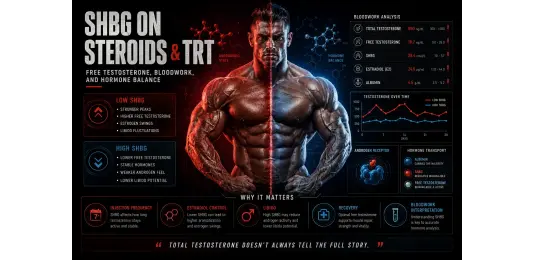
SHBG on steroids and TRT becomes important once bloodwork numbers stop matching how someone actually feels. A man can show strong total testosterone levels and still deal with low libido, flat mood, weak recovery, inconsistent erections, or poor training drive. In a lot of those cases, SHBG bloodwork helps explain what total testosterone alone cannot.

Quick Summary

  • SHBG means sex hormone-binding globulin. It binds testosterone and changes how much free testosterone remains available.
  • SHBG on steroids and TRT affects free testosterone more than most users realize.
  • Low SHBG can create sharper hormonal peaks and stronger fluctuations.
  • High SHBG may make total testosterone look better than the user actually feels.
  • SHBG bloodwork should always be interpreted together with estradiol, albumin, lipids, blood pressure, liver markers, and symptoms.

What SHBG Actually Does Inside the Body

SHBG on steroids and TRT matters because testosterone does not circulate freely in one simple form. Some testosterone is tightly attached to sex hormone-binding globulin, some is loosely attached to albumin, and only a smaller percentage exists as free testosterone.

That free testosterone fraction is what most lifters, TRT users, and enhanced athletes are really trying to understand. Total testosterone may look impressive on paper, but if SHBG is high, the amount of bioavailable testosterone may not match the number.

This is one reason SHBG bloodwork becomes important in real-world hormone management. Two men can run the same testosterone dose and report completely different results. One feels aggressive, motivated, strong, and sexually stable. The other feels emotionally flat, underdosed, or inconsistent despite "good" labs.

SHBG on steroids and TRT helps explain those differences because SHBG changes how much testosterone is actually available to tissues and androgen receptors.

That is also why experienced TRT users eventually stop focusing only on total testosterone. They start reading free testosterone, SHBG, estradiol, albumin, blood pressure, hematocrit, lipids, liver enzymes, and recovery patterns together.

Why SHBG on Steroids and TRT Feels Different Between Users

One of the reasons SHBG on steroids and TRT creates confusion is that the same lab result can feel completely different depending on the individual.

A lean athlete with stable sleep, good insulin sensitivity, decent cardiovascular health, and moderate testosterone dosing may tolerate lower SHBG very well. Another user with poor sleep, high stress, elevated body fat, inconsistent injections, and poor lipid health may feel unstable quickly once SHBG drops.

This is where online hormone discussions often go wrong. Someone posts a lab number and expects everyone else to respond identically. Real physiology does not work that way.

SHBG bloodwork is influenced by multiple variables:

  • Body fat percentage
  • Insulin resistance
  • Calorie intake
  • Liver function
  • Thyroid hormones
  • Injection frequency
  • Androgen exposure
  • Oral steroid use
  • Sleep quality
  • Genetics

This is why SHBG on steroids and TRT should never be interpreted as "high is bad" or "low is good." The context changes everything.

Related reading: SHBG interpretation connects closely with Estrogen Control on Cycle, Libido and ED on Steroids, Water Retention on Steroids, and High Blood Pressure on Steroids.

Low SHBG on Steroids and TRT

Why Low SHBG Can Feel Stronger

Low SHBG on steroids and TRT often means a larger percentage of testosterone remains free instead of tightly bound. Some users genuinely feel better in this range. Libido can increase, workouts feel more aggressive, pumps improve, and androgen effects may feel stronger overall.

The downside is that lower SHBG can also increase hormonal volatility. Injection peaks may feel sharper. Estradiol movement may become more noticeable. Mood swings, irritability, acne, oily skin, and fluctuating libido can appear faster.

That is why SHBG on TRT becomes important when someone says they feel amazing for one or two days after an injection and then suddenly crash mentally or physically.

Low SHBG and Estradiol Sensitivity

SHBG on steroids and TRT also changes how some users experience estradiol fluctuations. A low SHBG user may notice estrogen-related symptoms much faster than someone with higher SHBG.

Water retention, emotional sensitivity, nipple irritation, unstable libido, or sudden mood shifts may appear even when estradiol numbers are not dramatically elevated.

This is one reason why aggressive aromatase inhibitor use often backfires. A lot of users try to "fix estrogen" when the real issue is unstable hormone management combined with low SHBG and inconsistent injection patterns.

Low SHBG Pattern Possible Real-World Effect
Higher free testosterone Stronger androgen feel
Sharper hormonal peaks More noticeable injection highs and lows
Lower SHBG with poor lipids Possible metabolic strain
Low SHBG with acne or oily skin Higher androgen expression in tissues
Low SHBG with libido swings Estradiol movement may feel more aggressive

High SHBG on Steroids and TRT

Why High SHBG Can Be Misleading

High SHBG on steroids and TRT creates the opposite problem. Total testosterone may look perfectly acceptable while free testosterone stays lower than expected.

This can produce a frustrating situation where the lab report looks "good" but the user still feels flat. Libido remains inconsistent, recovery feels average, erections feel unreliable, and training motivation never fully clicks into place.

SHBG bloodwork becomes extremely important in these cases because total testosterone alone does not explain the situation properly.

Why Total Testosterone Alone Is Not Enough

A lot of TRT users eventually realize that total testosterone is only part of the story. SHBG on TRT changes how much testosterone actually becomes bioavailable testosterone.

That is why some men feel underdosed even with respectable total testosterone levels. High SHBG can reduce how much hormone remains freely available.

This is also where free testosterone interpretation becomes far more useful than obsessing over one total testosterone number.

SHBG and Injection Frequency

Why Injection Timing Matters

SHBG on steroids and TRT often changes how someone responds to injection frequency.

Lower SHBG users usually feel large infrequent injections more aggressively. Testosterone peaks harder, then falls harder. Libido and mood may swing more. Water retention can fluctuate faster. Sleep quality may also become less stable.

Higher SHBG users sometimes tolerate wider injection spacing more comfortably because hormone movement feels smoother overall.

This does not mean one schedule works for everyone. SHBG bloodwork simply helps explain why identical testosterone protocols can feel completely different between users.

These testosterone ester guides connect directly with injection timing and SHBG interpretation:

SHBG, Libido, and Mental State

Why Libido Is More Complex Than Testosterone Alone

SHBG on steroids and TRT strongly affects libido interpretation because libido is not controlled by testosterone alone.

Estradiol, dopamine signaling, sleep quality, prolactin, cardiovascular health, stress, and free testosterone all interact together.

This is why one user can have strong testosterone levels but still experience weak libido or erectile inconsistency. SHBG bloodwork often becomes useful once symptoms stop matching the obvious number.

A lot of users immediately blame estradiol when libido drops. Sometimes they are right. Other times the real issue is unstable free testosterone, aggressive AI use, poor sleep, elevated blood pressure, or inconsistent injection timing.

That broader interpretation matters because SHBG on steroids and TRT sits inside a much larger hormone environment.

Common mistake

One of the biggest mistakes in hormone management is adding more compounds before understanding the bloodwork properly. Increasing testosterone, crushing estrogen, changing esters, or adding Proviron without understanding SHBG often creates more confusion instead of solving the problem.

Bloodwork Markers That Matter With SHBG

SHBG on steroids and TRT should never be interpreted as an isolated lab value.

At minimum, most serious users should understand:

  • Total Testosterone
  • Free Testosterone
  • SHBG
  • Albumin
  • Estradiol
  • CBC and Hematocrit
  • Liver Enzymes
  • Lipid Panel
  • Blood Pressure
  • Fasting Glucose or Insulin Resistance Markers

SHBG bloodwork becomes far more useful once it is viewed together with broader cardiovascular and metabolic health markers.

These related guides strengthen the same monitoring framework:

Products Commonly Discussed Around SHBG and TRT

SHBG on steroids and TRT naturally overlaps with testosterone products, estrogen-management compounds, and androgen-support discussions.

Common testosterone products include:

Estradiol-management discussions commonly include:

Some users also discuss Proviron because of its relationship with androgen feel, libido, and SHBG-related conversations.

Common Mistakes With SHBG on TRT

Chasing Perfect Numbers

SHBG on steroids and TRT is not about finding one magical number. Context matters far more than optimization obsession.

Ignoring Lifestyle Variables

Sleep deprivation, poor diet, alcohol, body fat gain, and insulin resistance can all influence SHBG bloodwork.

Using Total Testosterone Alone

Total testosterone without free testosterone and SHBG interpretation misses a large part of the hormone picture.

Overusing Aromatase Inhibitors

A lot of users crash estradiol unnecessarily while trying to fix symptoms that are actually related to unstable hormone management or poor bloodwork interpretation.

Practical Takeaway

SHBG on steroids and TRT matters because it helps explain why hormone numbers and real-world symptoms sometimes fail to match.

It helps explain why one man feels stable and strong at moderate testosterone levels while another feels inconsistent despite impressive total testosterone.

The goal is not to obsess over SHBG itself. The goal is understanding how SHBG interacts with free testosterone, estradiol, injection timing, recovery, sleep, cardiovascular health, and overall hormone balance.

Once SHBG bloodwork is interpreted inside the full picture instead of isolation, decision-making becomes far more logical and far less emotional.

Frequently Asked Questions

Q: What does SHBG mean on testosterone bloodwork?

SHBG stands for sex hormone-binding globulin. It is a protein that binds testosterone and affects how much free testosterone remains available inside the body.

Q: Can steroids lower SHBG?

Some anabolic steroids and testosterone protocols can lower SHBG, especially when androgen exposure becomes high or metabolic health worsens.

Q: Why is free testosterone more important than total testosterone?

Free testosterone often reflects hormone availability more accurately because total testosterone alone does not show how much testosterone is tightly bound to SHBG.

Q: What is a normal SHBG level on TRT?

There is no single perfect SHBG level for every TRT user. Symptoms, free testosterone, estradiol balance, and overall health markers matter more than chasing one isolated number.

Q: Can low SHBG cause libido problems?

Low SHBG can sometimes increase hormonal volatility, which may contribute to libido swings, estradiol sensitivity, and unstable mood in some users.

Q: Should SHBG be tested during a steroid cycle?

SHBG bloodwork becomes useful when free testosterone, libido, estradiol symptoms, or injection response stop matching total testosterone numbers.