Estrogen Control on Cycle: High, Low, and What Actually Matters
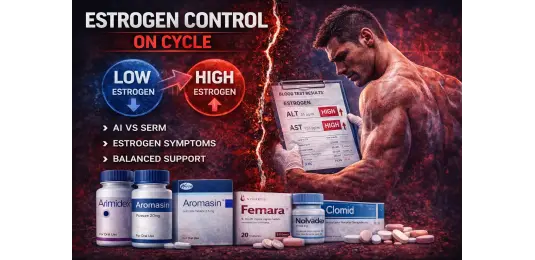
Estrogen control is one of the most important and most misunderstood parts of running an anabolic steroid cycle. A lot of users think about estrogen only when obvious problems appear, such as water retention, nipple sensitivity, or a softer look in the mirror. But estrogen management is much bigger than that. It affects how a cycle feels day to day, how stable the user feels, how well the body handles fluid, and how sustainable the entire phase becomes.
The biggest mistake is treating estrogen like something that should always be crushed as low as possible. That is not how real cycle management works. Estrogen is not just a side effect. It is part of normal function. It affects mood, joints, libido, and general well-being. The real goal is not zero estrogen. The goal is control and balance.
High estrogen can make the whole phase feel heavy, soft, unstable, and uncomfortable. Low estrogen can make it feel dry, flat, irritable, and equally miserable. A good cycle is usually not built around extreme suppression. It is built around managing estrogen well enough that the user can keep the benefits of the cycle without letting side effects take over.
Why Estrogen Matters on Cycle
Most testosterone-based cycles increase estrogen because testosterone can aromatize into estrogen. That conversion is a normal biological process, but when testosterone levels rise well above natural levels, estrogen often rises with them. This is one reason why users on aromatizing compounds frequently deal with bloating, fluid retention, and other estrogen-related changes.
The important part is that estrogen itself is not the enemy. Many users actually feel worse when estrogen is pushed too low than when it is slightly elevated. A cycle with no meaningful estrogen control can drift into visible side effects, but a cycle with too much control can feel just as bad in a different way. Estrogen management is always a balancing act, not a "more suppression is better" situation.
What High Estrogen Usually Looks Like
When estrogen starts running too high during a cycle, the first thing many users notice is a change in look and feel. The physique may appear softer, the face can look puffier, and water retention becomes more obvious. Some users describe the whole phase as feeling heavier and messier than expected, even when training is still moving well.
There can also be more specific warning signs. Nipple sensitivity, unusual swelling, emotional instability, and a general sense of being "off" are all common complaints in real-world use. In some cases, the user may also notice blood pressure becoming harder to manage, especially if the cycle is already water-heavy. Fluid and pressure often rise together.
High estrogen also changes how the cycle feels overall. What might have been a productive testosterone phase starts to feel bloated, less controlled, and less visually rewarding. That is often the point where users begin looking at products like Arimidex, Aromasin, or Femara as part of a more structured support approach.
What Low Estrogen Usually Feels Like
Low estrogen is different, but it is not better. In fact, many users are surprised by how bad a cycle can feel once estrogen is pushed too low. The look may become drier, but the user often starts to feel flat, irritable, less comfortable in the joints, and less stable overall. Libido can become inconsistent, mood can get worse, and the phase may stop feeling productive in a satisfying way.
This is one reason why aggressive aromatase inhibitor use can backfire. A user might fix water retention and sensitivity, but create a different set of problems that make the cycle harder to live with. The mistake is assuming that because high estrogen causes side effects, low estrogen must automatically be ideal. In practice, that is rarely true.
The best estrogen management is usually not dramatic — it is controlled and barely noticeable. When it is done right, the user does not feel hormone swings. The cycle just feels stable.
Why Estrogen Control Affects More Than Appearance
A lot of users first think about estrogen because of visual concerns. They want to stay drier, avoid looking soft, and reduce the risk of gynecomastia-related issues. Those are valid reasons, but they are not the whole picture. Estrogen control also changes how the cycle performs from a health and comfort perspective.
High estrogen often contributes to fluid retention, and fluid retention can make blood pressure harder to manage. It can also make the user feel more sluggish and less athletic. On the other side, low estrogen can make the cycle feel mechanically worse, especially in the joints and in general mood stability. The real issue is not just how the physique looks, but how the cycle actually feels day to day.
This is why estrogen control sits at the center of most well-built cycles. It directly affects cardiovascular strain, overall comfort, training feel, and how clean or messy the physique looks during a phase.
AI vs SERM: What Is the Difference?
One of the most important distinctions in estrogen management is the difference between aromatase inhibitors and SERMs. Aromatase inhibitors, often called AIs, work by reducing the conversion of testosterone into estrogen. In simple terms, they lower estrogen production and are the main tools used during a cycle.
SERMs, by contrast, do not reduce estrogen the same way. Instead, they interact with estrogen receptors in specific tissues. This is why they are more often associated with gynecomastia control or post-cycle recovery rather than full-cycle estrogen suppression.
That distinction matters because many users confuse the two. They assume a SERM is just a weaker AI or that an AI can replace every SERM function. In practice, they solve different problems. Products like Nolvadex and Clomid belong to a different support category than Arimidex, Aromasin, or Femara.
Arimidex: Controlled and Common
Arimidex is one of the most common options for routine estrogen control during a cycle. It sits in the middle ground — strong enough to matter, but not usually treated as the most aggressive option. This makes it popular for testosterone-based cycles where users want to reduce bloating without over-suppressing estrogen.
Many users prefer Arimidex because it feels adjustable and predictable. It is often used as a baseline control tool rather than a last-resort fix.
Aromasin: Often Chosen for a Different Feel
Aromasin is another widely used AI, often chosen by users who want stable estrogen control with a slightly different overall feel. It appears frequently in structured support plans and is not just a backup option, but a core part of many cycles.
Femara: Stronger, Harsher, and Less Routine
Femara is generally considered the strongest option among common AIs. It is typically used when more aggressive suppression is needed, not for everyday control. Because of its strength, it requires more careful use and is not usually the first choice for standard cycles.
Where Nolvadex Fits In
Nolvadex is widely known but often misunderstood in on-cycle estrogen discussions. It does not lower estrogen the same way as an AI. Instead, it works at the receptor level, especially in tissues related to gynecomastia.
This is why it is often used when specific side effects become a concern and also plays a major role in post-cycle planning.
Where Clomid Fits In
Clomid is more closely associated with recovery than with on-cycle estrogen control. It helps restore hormonal function after a cycle and is not typically used as a primary tool for managing high estrogen during the cycle itself.
Common Estrogen Control Mistakes
One of the most common mistakes is overreacting. A small amount of water retention leads to aggressive suppression, which then creates a different set of problems. Another mistake is ignoring early signs and waiting until side effects become harder to manage.
Users also often copy protocols without understanding their own response. Estrogen levels and reactions vary depending on dose, compounds, body composition, and overall cycle setup. What works for one person may not work for another.
Focusing only on appearance is another common error. A cycle that looks dry but feels terrible is not a well-managed cycle. The best cycles look good and feel stable at the same time.
How Estrogen Balance Is Managed in Practice
In real-world use, estrogen balance is managed through observation and adjustment. Users pay attention to water retention, mood, joint comfort, libido, and overall cycle feel. These signals guide how much support is needed.
The overall cycle environment also matters. Diet, training intensity, compound selection, and total dosage all influence how estrogen behaves. A controlled setup usually leads to more stable estrogen, while aggressive cycles often require more active management.
Final Thoughts
Estrogen control on cycle is not about eliminating estrogen. It is about maintaining balance so the cycle remains productive, comfortable, and sustainable. Both high and low estrogen can create problems, just in different ways.
The most effective approach is measured and consistent. Use the right tools when needed, avoid overcorrection, and focus on overall stability rather than extreme suppression.
FAQ
Why does estrogen rise on cycle?
Estrogen rises because testosterone can convert into estrogen, especially when hormone levels are elevated.
Is high estrogen always bad?
No, but excessive estrogen can lead to bloating, water retention, and other unwanted side effects.
Can estrogen be too low?
Yes, low estrogen can negatively affect mood, joints, libido, and overall cycle comfort.
What is the difference between AI and SERM?
AIs reduce estrogen production, while SERMs affect how estrogen interacts with receptors in the body.
Which compounds are used for estrogen control?
Common options include Arimidex, Aromasin, and Femara, with Nolvadex and Clomid used for different support roles.