Estradiol on TRT and Steroids: Why E2 Matters More Than Most Men Think
  • By Ethan Cole
  • May 30, 2026
  • Reading Time: 15 mins
Estradiol on TRT and Steroids: Why E2 Matters More Than Most Men Think
Hormone Bloodwork Guide

Estradiol on TRT and Steroids: Why E2 Matters More Than Most Men Think

Estradiol on TRT and steroids is one of the most misunderstood topics in hormone management. Mention estrogen in a bodybuilding forum and the conversation often turns negative within seconds. Water retention, gynecomastia, mood swings, and aromatase inhibitors quickly become the focus.

The reality is far more interesting. Estradiol is not simply a side effect of testosterone. It is one of the hormones that helps men function normally. Libido, erectile quality, recovery, mood, cardiovascular health, bone density, and even training performance can all be influenced by estradiol.

Many men spend years trying to increase testosterone while paying almost no attention to estradiol. Others make the opposite mistake and become obsessed with lowering estrogen every time a blood test shows a number they do not like. Both approaches often create unnecessary problems.

Understanding estradiol on TRT and steroids means understanding balance rather than extremes. The goal is not to eliminate estrogen. The goal is to understand how it works alongside testosterone and why both hormones matter.

Quick Summary

  • Estradiol is an essential hormone for men, not just women.
  • Most estradiol in men comes from testosterone through aromatization.
  • Both high estradiol and low estradiol can create symptoms.
  • Estradiol affects libido, erections, recovery, mood, and cardiovascular health.
  • Many TRT and steroid users create problems by crashing estrogen unnecessarily.
  • Estradiol should always be interpreted alongside testosterone, SHBG, symptoms, and overall bloodwork.
  • The goal is hormonal balance, not chasing the lowest possible E2 level.

What Is Estradiol?

Estradiol, often abbreviated as E2, is the primary form of estrogen found in both men and women. Although estrogen is frequently described as a female hormone, that description is incomplete and often misleading.

Men naturally produce estradiol throughout life. In fact, healthy male physiology depends on it. The body uses estradiol in dozens of different processes that extend far beyond reproduction.

When discussing estradiol on TRT and steroids, it is important to understand that estradiol is not usually injected directly. Most male estradiol is produced when testosterone is converted through an enzyme called aromatase.

This conversion process is known as aromatization. Every man aromatizes testosterone to some degree. Some men convert more, while others convert less. Genetics, body fat levels, insulin sensitivity, age, lifestyle, and total testosterone exposure all influence how much estradiol is produced.

This is why two men using similar testosterone doses can have completely different estradiol levels.

The important point is that estradiol production is a normal biological process. The body is not making a mistake when testosterone converts into estrogen. It is performing a function that human physiology has relied on for millions of years.

Why Men Need Estrogen

One of the biggest myths in performance enhancement culture is that estrogen is the enemy.

This belief has created years of confusion among TRT patients and steroid users. While excessively high estradiol can absolutely create issues, eliminating estrogen is not a healthy goal.

Men need estrogen for normal function.

Estradiol contributes to:

  • Sexual function
  • Libido
  • Erectile quality
  • Joint comfort
  • Bone density
  • Mood stability
  • Cognitive function
  • Cardiovascular health
  • Recovery processes

This is one reason estradiol on TRT and steroids deserves more attention than it often receives. Many symptoms blamed on testosterone are actually connected to estradiol balance.

When estradiol falls too low, men often describe a very specific pattern. Libido disappears. Erections become weaker. Joints begin to feel dry or uncomfortable. Motivation declines. Training feels flat. Recovery suffers. Mood becomes less stable.

Interestingly, some of these symptoms are almost identical to symptoms commonly blamed on low testosterone.

That overlap is exactly why bloodwork interpretation requires context.

A man may see a strong testosterone number and wonder why he feels worse than expected. In some cases, estradiol explains the discrepancy.

How Testosterone Becomes Estradiol

Understanding estradiol on TRT and steroids requires understanding aromatization.

Aromatase is an enzyme that converts testosterone into estradiol. This process occurs naturally throughout the body, particularly in adipose tissue, muscle tissue, and other organs.

The more testosterone available, the greater the potential for estradiol production.

This does not mean estradiol will automatically become excessive. It simply means that increased testosterone exposure creates greater opportunity for aromatization.

That is one reason estradiol often rises during TRT and anabolic steroid use.

Body fat also influences aromatization. Individuals carrying higher levels of body fat frequently produce more estradiol because adipose tissue contains aromatase activity.

This helps explain why two individuals using similar testosterone doses may show very different estradiol results.

Estradiol on TRT and steroids is therefore not determined by testosterone alone. Body composition, genetics, lifestyle, metabolic health, and aromatase activity all contribute.

Why Estradiol Rises on TRT and Steroids

One of the most common concerns among new TRT users is seeing estradiol increase on bloodwork.

In many situations, this increase is completely expected.

If testosterone rises, estradiol often rises as well. That relationship exists because estradiol is largely produced from testosterone.

The mistake many men make is assuming that every estradiol increase is automatically dangerous.

Bloodwork interpretation does not work that way.

A slightly higher estradiol level accompanied by excellent libido, stable mood, strong erections, good blood pressure, and positive recovery may not represent a problem at all.

This is where symptom-based interpretation becomes extremely valuable.

Estradiol on TRT and steroids should never be evaluated using one laboratory value alone. The broader context matters far more.

Estradiol and Hormonal Balance

Testosterone and estradiol function as part of the same hormonal ecosystem.

Attempting to maximize one while eliminating the other often produces disappointing results.

This is why experienced hormone specialists rarely focus on a single laboratory marker.

Instead, they evaluate:

  • Total testosterone
  • Free testosterone
  • SHBG
  • Estradiol
  • Symptoms
  • Blood pressure
  • Lipids
  • Recovery
  • Sexual function

Estradiol on TRT and steroids becomes much easier to understand when viewed as one piece of a larger physiological picture rather than an isolated laboratory number.

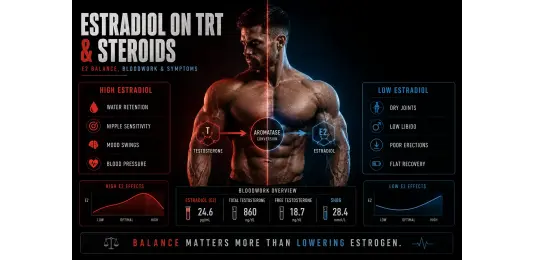
High Estradiol Symptoms

When discussing estradiol on TRT and steroids, one of the biggest mistakes is assuming that every symptom automatically means estrogen is too high. Real hormone interpretation is rarely that simple.

That said, elevated estradiol can absolutely create recognizable symptoms in some individuals. The severity depends on genetics, testosterone levels, SHBG, body composition, cardiovascular health, and overall hormone balance.

Some men tolerate relatively high estradiol without noticeable issues. Others become symptomatic much sooner.

Commonly reported high estradiol symptoms include:

  • Water retention
  • Increased facial puffiness
  • Nipple sensitivity
  • Emotional volatility
  • Reduced erectile quality
  • Decreased libido
  • Blood pressure increases
  • Difficulty achieving a dry physique

One important point often overlooked is that many of these symptoms can also occur when estradiol becomes too low. This is one reason blindly adjusting hormones without bloodwork can create confusion.

Estradiol on TRT and steroids should always be interpreted within the context of actual symptoms rather than laboratory numbers alone.

Low Estradiol Symptoms

While elevated estrogen receives most of the attention online, low estradiol often causes even more problems.

This becomes especially common when men aggressively use aromatase inhibitors in an attempt to eliminate every sign of estrogen.

Estradiol on TRT and steroids becomes problematic when users start treating estrogen as something that should not exist at all.

In reality, very low estradiol can negatively affect multiple systems simultaneously.

Common low estradiol symptoms include:

  • Low libido
  • Poor erections
  • Joint discomfort
  • Dry joints
  • Low mood
  • Reduced motivation
  • Poor recovery
  • Flat training performance
  • Reduced sense of well-being

Many experienced TRT users eventually discover that they feel worse with excessively low estradiol than they do with mildly elevated estradiol.

This is one reason modern hormone management focuses on balance rather than elimination.

High Estradiol vs Low Estradiol

High Estradiol Low Estradiol
Water retention Dry joints
Nipple sensitivity Low libido
Blood pressure increases Poor erections
Difficulty staying dry Flat training performance
Emotional volatility Low mood
Potential gynecomastia risk Poor recovery

This comparison highlights why estradiol on TRT and steroids cannot be reduced to simple "high is bad" thinking.

Both extremes can negatively affect performance, health, and quality of life.

Estradiol and Libido

Libido is one of the areas where estradiol on TRT and steroids becomes particularly important.

Many men assume testosterone alone determines sexual desire. While testosterone absolutely matters, libido is influenced by multiple hormones working together.

Estradiol appears to play a significant role in maintaining healthy sexual function.

Men with excessively low estradiol frequently report:

  • Reduced sexual interest
  • Reduced spontaneous erections
  • Reduced responsiveness to sexual stimulation
  • Loss of overall sexual confidence

Interestingly, elevated estradiol can also contribute to libido issues in some individuals.

This is why symptom interpretation requires context rather than assumptions.

The goal is not maximizing estradiol. The goal is maintaining an environment where testosterone and estradiol function together effectively.

Estradiol and Erections

Erectile quality is another area where estradiol on TRT and steroids is often misunderstood.

Many men assume weak erections automatically indicate low testosterone. Sometimes they do. Sometimes the explanation is more complex.

Both excessively high and excessively low estradiol can negatively affect erectile quality.

This is one reason bloodwork becomes important when symptoms appear.

A man may increase testosterone repeatedly hoping to improve erectile function while the real issue involves estradiol balance, cardiovascular health, blood pressure, sleep quality, or psychological stress.

Hormone interpretation becomes much more effective when all of these variables are considered together.

Estradiol and Water Retention

Water retention is one of the most visible consequences associated with estradiol on TRT and steroids.

Higher estradiol levels can increase fluid retention in susceptible individuals. This often appears as:

  • Facial puffiness
  • Softer appearance
  • Increased scale weight
  • Reduced muscular definition

Bodybuilders often notice these changes quickly because they spend so much time evaluating body composition.

However, it is important to remember that water retention alone does not automatically indicate a dangerous situation.

The broader context still matters. Blood pressure, cardiovascular markers, symptoms, and overall health should always be considered.

Related reading:

Water Retention on Steroids

Estradiol and Blood Pressure

Blood pressure is often overlooked when discussing estradiol on TRT and steroids.

Many users focus on appearance-related symptoms while ignoring cardiovascular markers.

Water retention associated with elevated estradiol can sometimes contribute to increases in blood pressure. This does not occur in every individual, but it remains an important factor to monitor.

For this reason, blood pressure should be viewed as part of routine hormone monitoring rather than a completely separate issue.

Strong hormone management always includes health markers alongside performance markers.

A physique may look impressive while blood pressure trends in the wrong direction. Long-term success requires attention to both.

Estradiol and Free Testosterone

One of the reasons estradiol on TRT and steroids becomes confusing is that estradiol does not exist independently from the rest of the hormone system.

Estradiol interacts with testosterone, free testosterone, SHBG, recovery, libido, mood, and overall well-being.

This is why evaluating estradiol without looking at testosterone markers often leads to poor conclusions.

A man may have elevated estradiol but also have excellent free testosterone, stable libido, good erections, and strong recovery. Another may have similar estradiol levels but experience completely different symptoms because SHBG, free testosterone, sleep quality, or cardiovascular health are different.

The relationship between estradiol and testosterone is one reason bloodwork should be interpreted as a complete picture rather than a collection of isolated numbers.

Estradiol on TRT and steroids becomes much easier to understand when viewed alongside:

  • Total Testosterone
  • Free Testosterone
  • SHBG
  • Albumin
  • Blood Pressure
  • Symptoms

Why Too Many Men Crash Estradiol

One of the most common mistakes in hormone management is assuming that every estradiol increase requires immediate intervention.

This often happens after reading forum discussions, social media posts, or outdated bodybuilding advice.

A man sees a blood test showing higher estradiol, becomes concerned, and immediately focuses on lowering E2.

Sometimes this creates more problems than it solves.

Estradiol on TRT and steroids should be interpreted through symptoms and overall bloodwork rather than fear.

Many users discover that the symptoms they are trying to eliminate become worse after estrogen is aggressively reduced.

Libido declines. Erections weaken. Mood worsens. Training performance suffers. Joint discomfort increases.

In many cases, these individuals are not suffering from excessive estrogen. They are suffering from insufficient estrogen.

This is one reason experienced clinicians typically focus on overall balance rather than chasing the lowest possible estradiol number.

Aromatase Inhibitors and Common Misunderstandings

Aromatase inhibitors are frequently discussed whenever estradiol on TRT and steroids becomes part of the conversation.

These compounds reduce the conversion of testosterone into estradiol by affecting aromatase activity.

What often gets lost in online discussions is that aromatase inhibitors are tools, not goals.

The objective is not to eliminate estradiol. The objective is appropriate hormone balance.

One of the biggest mistakes made by inexperienced users is assuming that lower estradiol automatically means better results.

Real-world experience often demonstrates the opposite.

When estradiol becomes excessively suppressed, many users report:

  • Reduced libido
  • Poor erection quality
  • Dry joints
  • Reduced training enjoyment
  • Fatigue
  • Mood changes

This is why aromatase inhibitors should never be viewed as simple performance-enhancing tools.

They influence an important hormone that affects multiple systems throughout the body.

Products commonly discussed in estrogen management:

Anastrozole 1 mg
Arimidex
Aromasin
Femara

When Estradiol Bloodwork Should Be Checked

Estradiol on TRT and steroids should not be interpreted from random testing performed under inconsistent conditions.

Like testosterone, estradiol is most useful when trends are evaluated over time.

Testing conditions should be as consistent as possible.

Important considerations include:

  • Using the same laboratory whenever possible
  • Testing under similar conditions
  • Considering injection timing
  • Comparing symptoms alongside results
  • Reviewing testosterone markers at the same time

A single laboratory value rarely tells the entire story.

Patterns are usually more informative than isolated measurements.

Common Mistakes When Interpreting Estradiol

Assuming Estrogen Is a Female Hormone Only

Men need estradiol for normal function. Eliminating estrogen is not a healthy objective.

Ignoring Symptoms

Bloodwork matters, but symptoms provide context. Numbers should not be interpreted in isolation.

Focusing on One Marker

Estradiol should be evaluated alongside testosterone, free testosterone, SHBG, blood pressure, and overall health markers.

Making Rapid Changes

Hormones respond over time. Constantly changing variables makes interpretation much harder.

Why Chasing a Perfect Estradiol Number Usually Fails

One of the most useful lessons experienced TRT users learn is that there is rarely a single perfect estradiol number that guarantees ideal outcomes.

Hormones do not operate in isolation.

Two men with identical estradiol results may feel completely different depending on testosterone levels, SHBG, sleep quality, cardiovascular health, body composition, and stress.

This is why successful long-term hormone management focuses on trends, symptoms, health markers, and overall quality of life rather than pursuing one laboratory target.

Estradiol on TRT and steroids becomes much easier to manage when viewed as part of a larger system instead of a problem that must constantly be fought.

Practical Takeaway

Estradiol on TRT and steroids is one of the most important hormone topics a man can understand.

Estradiol is not the enemy. It is not a mistake. It is not simply a side effect of testosterone.

Healthy male physiology depends on appropriate estradiol levels.

Both excessively high estradiol and excessively low estradiol can create problems. The objective is not elimination. The objective is balance.

When interpreting bloodwork, estradiol should be viewed alongside total testosterone, free testosterone, SHBG, symptoms, blood pressure, recovery, libido, and overall health.

The men who achieve the most stable long-term results are usually not the ones chasing the lowest estrogen levels. They are the ones who understand how testosterone and estradiol work together.

Frequently Asked Questions

Q: What is a normal estradiol level on TRT?

There is no single ideal number that applies to every man. Estradiol should be interpreted alongside testosterone levels, SHBG, symptoms, and overall health markers.

Q: Can high estradiol cause erectile dysfunction?

Elevated estradiol may contribute to erectile issues in some men, but testosterone levels, cardiovascular health, sleep quality, and psychological factors should also be considered.

Q: Can low estradiol cause joint pain?

Yes. Joint discomfort and a sensation of dry joints are commonly reported when estradiol becomes excessively suppressed.

Q: Why is my estradiol high on testosterone?

Most male estradiol is produced from testosterone through aromatization. As testosterone exposure increases, estradiol often rises as well.

Q: Should every TRT patient take an aromatase inhibitor?

No. Estradiol management should be individualized. Many men maintain healthy estradiol levels without requiring estrogen-lowering medication.

Q: How do I know if my estradiol is too low?

Low libido, poor erections, dry joints, reduced recovery, low mood, and a decline in overall well-being may occur when estradiol becomes excessively low.