Low Estrogen Symptoms on Steroids and TRT: Why Crashed E2 Can Feel Worse Than High Estrogen
  • By Ethan Cole
  • May 31, 2026
  • Reading Time: 14 mins
Low Estrogen Symptoms on Steroids and TRT: Why Crashed E2 Can Feel Worse Than High Estrogen
Hormone Bloodwork Guide

Low Estrogen Symptoms on Steroids and TRT: Why Crashed E2 Can Feel Worse Than High Estrogen

Low estrogen symptoms on steroids and TRT are often misunderstood because most men are taught to fear high estrogen first. In bodybuilding circles, estrogen usually gets blamed for water retention, nipple sensitivity, mood swings, and a softer look. That part of the discussion is real, but it is only half of the story.

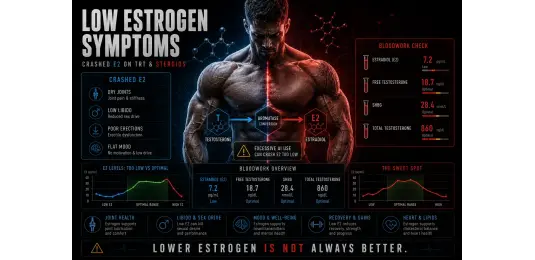
When estradiol drops too low, many men feel worse than they expected. Libido disappears, erections become unreliable, joints feel dry, mood gets flat, recovery slows down, and training loses its usual drive. The problem is that these symptoms can look confusing because they are often blamed on testosterone, stress, or overtraining instead of crashed E2.

Understanding low estrogen symptoms on steroids and TRT means understanding that estrogen is not the enemy. Estradiol is a functional male hormone. The goal is not to crush it. The goal is to keep it in a range that supports sexual function, recovery, joints, mood, cardiovascular health, and hormone balance.

Quick Summary

  • Low estrogen symptoms on steroids and TRT often appear after aggressive aromatase inhibitor use or poor hormone management.
  • Estradiol is necessary for men. It supports libido, erections, joints, mood, bone health, and recovery.
  • Crashed E2 can mimic low testosterone. Low libido, poor erections, low mood, and weak training drive can all overlap.
  • Joint pain is one of the classic signs. Many users describe dry, irritated, or uncomfortable joints when estradiol falls too low.
  • Bloodwork matters. Symptoms alone are not enough because high and low estradiol can overlap.
  • The goal is balance. Lower estrogen is not automatically better.

What Low Estrogen Means in Men

Low estrogen symptoms on steroids and TRT usually refer to excessively low estradiol, often called E2. Estradiol is the main estrogen marker men usually track on hormone bloodwork. Even though estrogen is often described as a female hormone, men need it for normal function.

Most male estradiol is produced when testosterone converts through the aromatase enzyme. This process is called aromatization. It happens naturally in men and is not a mistake by the body. When testosterone rises, estradiol may rise too. When aromatase activity is blocked too aggressively, estradiol can fall too low.

That is where problems begin. Low estrogen symptoms on steroids and TRT often show up when a user treats estradiol like something that should be eliminated instead of managed. This mistake is common with men who use aromatase inhibitors too quickly, too strongly, or without matching bloodwork to symptoms.

Low estradiol does not always feel dramatic at first. Some men notice small changes: joints feel a little dry, libido is less responsive, mood feels flatter, or training feels less satisfying. Then the symptoms build. Erections become weaker, recovery gets worse, and the user starts wondering why testosterone suddenly feels ineffective.

This is why low estrogen symptoms on steroids and TRT should be taken seriously. Crashed E2 can make a strong testosterone protocol feel poor, even when total testosterone and free testosterone look good.

Why Estrogen Can Crash on Steroids and TRT

Low estrogen symptoms on steroids and TRT usually do not appear randomly. Most of the time, something pushes estradiol down too far.

The most common reason is aromatase inhibitor overuse. Aromatase inhibitors reduce the conversion of testosterone into estradiol. These compounds can be useful in specific situations, but they are often misunderstood. Many users treat them like preventive supplements instead of hormone-altering drugs.

Another common reason is changing too many variables at once. A user increases testosterone, adds an AI, changes injection frequency, adjusts diet, increases training intensity, and then tries to interpret symptoms. At that point, it becomes difficult to know what caused what.

Low estrogen symptoms on steroids and TRT may also become more noticeable when body fat is low. Very lean athletes may aromatize less than expected. If they also use an AI, estradiol can fall quickly.

Other factors can contribute too:

  • Overuse of aromatase inhibitors
  • Low body fat
  • Large protocol changes
  • Inconsistent bloodwork timing
  • Misreading water retention as automatic high estrogen
  • Trying to stay extremely "dry" year-round
  • Using forum-based advice without lab context

The key point is simple: low estrogen symptoms on steroids and TRT usually come from overcorrection. A user sees or fears high estrogen, pushes too hard in the opposite direction, and ends up with a different set of problems.

Why Men Need Estradiol

Low estrogen symptoms on steroids and TRT make more sense once you understand what estradiol does in men.

Estradiol supports sexual function, mood, joint comfort, recovery, bone density, and aspects of cardiovascular health. It also interacts with testosterone rather than working against it. A man does not need zero estrogen to feel masculine or perform well. He needs a balanced hormone environment.

This is where bodybuilding culture often gets the topic wrong. Estrogen is associated with water retention and gynecomastia, so many men assume less estrogen is always better. That thinking creates problems. Low estradiol can make a man feel sexually flat, emotionally dull, physically dry, and less resilient in training.

Low estrogen symptoms on steroids and TRT can also create confusion because they overlap with other issues. Low libido can be blamed on testosterone. Poor erections can be blamed on blood flow. Joint discomfort can be blamed on training. Low mood can be blamed on stress. Sometimes those explanations are correct. Sometimes estradiol is part of the missing context.

Healthy male hormone management is not about testosterone alone. It is about testosterone, estradiol, SHBG, free testosterone, blood pressure, lipids, recovery, sleep, and symptoms working together.

Crashed E2 vs High E2

One reason low estrogen symptoms on steroids and TRT are hard to identify is that high and low estradiol symptoms can overlap. Libido issues, erectile problems, mood changes, and poor training feel may appear in both situations.

This is why guessing can go wrong fast. A man feels bad, assumes estrogen is high, adds more AI, and then feels even worse because estradiol was already low or heading low.

Crashed / Low E2 High E2
Dry or painful joints Water retention and puffiness
Low libido with flat emotional tone Libido changes with emotional volatility
Poor erections and reduced sensitivity Poor erections with water retention or pressure changes
Flat training performance Soft look and reduced definition
Low mood or dull motivation Mood swings or irritability
Poor recovery and dry connective tissue feel Possible nipple sensitivity or gynecomastia risk

The table is not a diagnosis. It is a pattern guide. Low estrogen symptoms on steroids and TRT should still be confirmed with bloodwork, symptom history, timing, and the full hormone panel.

Low Estrogen and Libido

Low estrogen symptoms on steroids and TRT frequently show up in sexual function before they appear anywhere else. This is one reason experienced TRT patients often pay close attention to libido changes when evaluating hormone balance.

Many men assume testosterone alone controls libido. Testosterone is certainly important, but estradiol plays a meaningful supporting role. When estradiol falls too low, sexual desire can become noticeably weaker even when testosterone levels appear strong on paper.

Users often describe the experience in similar ways. Interest in sex decreases. Sexual thoughts become less frequent. The psychological drive that was present previously becomes weaker. Some men describe it as feeling disconnected from normal sexual motivation.

Low estrogen symptoms on steroids and TRT can therefore create a confusing situation where bloodwork shows healthy testosterone levels but libido still feels disappointing.

This is why libido should never be evaluated through testosterone alone. Estradiol, free testosterone, SHBG, sleep quality, stress, cardiovascular health, and recovery all contribute to sexual function.

Low Estrogen and Erections

Low estrogen symptoms on steroids and TRT often affect erection quality alongside libido.

Many users expect erectile function to improve automatically whenever testosterone increases. In reality, hormone physiology is more complicated. Testosterone helps support erections, but estradiol appears to contribute as well.

When estradiol becomes excessively suppressed, some men report:

  • Weaker erections
  • Reduced sensitivity
  • Reduced spontaneous erections
  • Difficulty maintaining erections
  • Reduced sexual confidence

These symptoms can create significant confusion. The user may assume testosterone is too low when the actual issue is that estradiol has been pushed too low.

Low estrogen symptoms on steroids and TRT become easier to recognize when erectile changes appear shortly after aggressive estrogen management or aromatase inhibitor use.

This does not mean estradiol is always responsible. Cardiovascular health, blood pressure, sleep, stress, and psychological factors remain important. However, estradiol should absolutely be considered when erection quality changes unexpectedly.

Low Estrogen and Joint Pain

Joint discomfort is one of the most recognizable low estrogen symptoms on steroids and TRT.

Bodybuilders frequently describe the sensation as "dry joints." While the phrase is not a medical diagnosis, it accurately reflects how many users experience the problem.

Joints may feel:

  • Less comfortable during training
  • More irritated under heavy loads
  • Stiffer than usual
  • Less resilient during repetitive movements
  • More prone to nagging discomfort

The effect is often most noticeable in athletes who train intensely. Heavy pressing, squatting, pulling, and high-volume bodybuilding sessions place significant stress on connective tissues. When estradiol becomes excessively low, some users feel that these tissues simply do not recover the same way.

Low estrogen symptoms on steroids and TRT are often mistaken for training problems at this stage. The athlete may blame exercise selection, training volume, or age without considering hormone balance.

This is one reason bloodwork becomes valuable. Joint pain alone is not enough to diagnose low estradiol, but it can be an important clue when it appears alongside other symptoms.

Low Estrogen and Mood

Mood changes are another area where low estrogen symptoms on steroids and TRT frequently appear.

Estradiol influences neurological processes that affect emotional state, motivation, and overall well-being. When estradiol becomes excessively suppressed, some users report a noticeable shift in how they feel mentally.

Common descriptions include:

  • Flat mood
  • Reduced enthusiasm
  • Less emotional responsiveness
  • Lower motivation
  • Reduced sense of well-being
  • Mental fatigue

The important point is that these symptoms do not always feel dramatic. Many men do not describe depression. Instead, they often describe feeling "off" without understanding exactly why.

Low estrogen symptoms on steroids and TRT can therefore quietly reduce quality of life without producing an obvious warning sign.

This is one reason hormone management should focus on overall function rather than isolated laboratory values.

Low Estrogen and Training Performance

Performance changes are frequently reported when estradiol falls too low.

Low estrogen symptoms on steroids and TRT can affect training in ways that are difficult to quantify but easy to feel.

Users commonly report:

  • Reduced training enjoyment
  • Poor recovery between sessions
  • Lower motivation to train
  • Increased joint discomfort
  • Reduced ability to maintain training intensity

This does not mean estradiol directly determines muscle growth. Rather, estradiol contributes to the environment that supports productive training.

When libido declines, mood flattens, joints hurt, and recovery worsens, performance often suffers as a secondary consequence.

Low estrogen symptoms on steroids and TRT can therefore influence progress indirectly even when testosterone levels remain high.

This is one reason experienced athletes often focus on how they perform and recover rather than chasing a specific estradiol number.

Common Signs That E2 May Be Too Low

  • Low libido despite strong testosterone levels
  • Weak or inconsistent erections
  • Dry or uncomfortable joints
  • Flat mood and reduced motivation
  • Poor training enjoyment
  • Reduced recovery quality
  • Feeling worse after increasing aromatase inhibitor use

Why Aromatase Inhibitor Overuse Creates Problems

Low estrogen symptoms on steroids and TRT most commonly appear after excessive aromatase inhibitor use. This pattern shows up repeatedly among TRT patients, bodybuilders, and performance-enhancing drug users.

The problem is not that aromatase inhibitors exist. The problem is that many people begin treating estradiol as something that should always be reduced.

That mindset often develops after reading online discussions where estrogen is blamed for every unwanted symptom. Water retention becomes estrogen. Mood changes become estrogen. Fat gain becomes estrogen. A slightly elevated laboratory value becomes estrogen.

The result is predictable. The user focuses on lowering estradiol instead of understanding hormone balance.

Low estrogen symptoms on steroids and TRT frequently appear shortly after this overcorrection occurs.

A user sees a blood test, worries about E2, increases estrogen management aggressively, and then notices:

  • Libido drops
  • Erections worsen
  • Joints become uncomfortable
  • Mood becomes flat
  • Training feels less productive
  • Recovery slows down

The situation becomes even more confusing because many people initially assume these new symptoms indicate high estrogen rather than low estrogen. This often leads to even more aggressive estrogen suppression.

Low estrogen symptoms on steroids and TRT can therefore become a self-created cycle when hormone decisions are made through fear instead of bloodwork and symptom analysis.

Products commonly discussed in estrogen management:

Anastrozole 1 mg
Arimidex
Aromasin
Exemestane Tablets
Femara
Nolvadex
Tamoxifen Tablets

Bloodwork Markers to Check

Low estrogen symptoms on steroids and TRT should never be diagnosed from symptoms alone.

Bloodwork provides context. Symptoms tell part of the story, but laboratory markers help identify whether estradiol is actually contributing to the problem.

Important markers include:

  • Estradiol (E2)
  • Total Testosterone
  • Free Testosterone
  • SHBG
  • Albumin
  • Hematocrit
  • Blood Pressure
  • Lipid Profile

Looking at estradiol alone often leads to poor conclusions. Hormones operate as a system. Testosterone, free testosterone, SHBG, estradiol, recovery, and symptoms should all be interpreted together.

This is one reason low estrogen symptoms on steroids and TRT are sometimes missed. The user focuses on a single marker while ignoring the rest of the hormonal picture.

Common Mistakes When Interpreting Low Estrogen Symptoms

Assuming Every Problem Is High Estrogen

One of the biggest mistakes in hormone management is assuming estrogen should always be lower.

Ignoring Bloodwork

Symptoms matter, but they should be interpreted alongside laboratory results.

Changing Too Many Variables at Once

Rapid adjustments make hormone interpretation far more difficult.

Focusing Only on Testosterone

Testosterone matters, but estradiol, SHBG, sleep, recovery, and cardiovascular health matter as well.

Practical Takeaway

Low estrogen symptoms on steroids and TRT are often more disruptive than many people expect. Libido, erections, mood, joints, recovery, and training performance can all suffer when estradiol becomes excessively suppressed.

Estradiol is not the enemy. Healthy male physiology depends on it.

The goal is not eliminating estrogen. The goal is maintaining balance between testosterone, estradiol, SHBG, recovery, cardiovascular health, and overall well-being.

When symptoms appear, avoid guessing. Review bloodwork, examine the full hormone picture, and remember that lower estradiol is not automatically better.

Frequently Asked Questions

Q: What are the most common low estrogen symptoms on steroids?

Low libido, poor erections, dry joints, low mood, reduced recovery, and decreased training enjoyment are among the most frequently reported symptoms.

Q: Can low estrogen cause erectile dysfunction?

Yes. Estradiol contributes to healthy sexual function, and excessively low levels may negatively affect erection quality.

Q: Can low estrogen cause joint pain?

Many users report dry or uncomfortable joints when estradiol becomes excessively suppressed.

Q: Why did I feel worse after taking an aromatase inhibitor?

One possible explanation is that estradiol fell too low. Bloodwork and symptom review are necessary for accurate interpretation.

Q: Can low estrogen symptoms look like low testosterone?

Yes. Libido issues, mood changes, poor erections, and reduced motivation can overlap significantly.

Q: How do I know if my estradiol is too low?

Symptoms alone are not enough. Estradiol should be evaluated using bloodwork together with testosterone, free testosterone, SHBG, and symptom history.