
Cholesterol on Steroids: HDL, LDL and Real Risk Guide
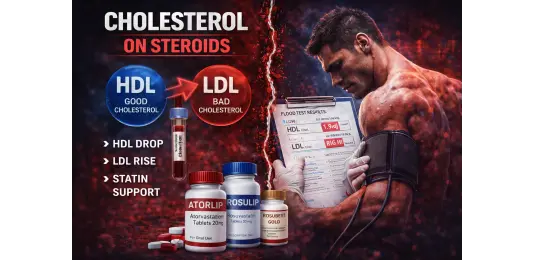
How Steroids Shift Cholesterol
Androgens change how the liver handles lipids: HDL - the protective fraction - drops, LDL rises, and the ratio moves in the wrong direction. The shift is strongest with oral compounds and with high androgen doses; injectable testosterone alone at TRD doses moves lipids far less than a dianabol or winstrol run. The effect is dose and compound dependent, not a rumor.
Which Compounds Hit Lipids Hardest
| Compound class | Lipid impact |
|---|---|
| Oral 17-alpha alkylated (Winstrol, Anavar, Dianabol, Anadrol) | Strongest - HDL can drop sharply |
| Trenbolone | Significant HDL drop, LDL rise |
| High-dose injectable testosterone | Moderate |
| TRT doses (100-200 mg/week) | Minimal for most men |
Winstrol is the notorious one - the Winstrol vs Anavar comparison puts the difference in perspective: both are cutting orals, but their lipid and joint profiles are not the same.
Why Lipids Matter on a Protocol
HDL is the cholesterol that clears arteries; LDL is the one that builds plaque. A cycle that drops HDL by half and pushes LDL up moves the cardiovascular risk profile measurably - and the effect compounds with hematocrit and blood pressure rises, which is why the three are read together. Men with existing lipid problems or a family history of heart disease should treat this panel as the gatekeeper.
How to Protect Cholesterol on Cycle
- Check lipids before, mid-cycle and after - the bloodwork guide covers the timing.
- Prefer injectables over long oral runs - shorter oral windows mean shorter lipid disruption.
- Keep doses moderate - lipid damage scales with dose; more is not worth the ratio.
- Add cardio and fiber - regular aerobic work and a clean diet genuinely blunt the shift.
- Consider omega-3s and lifestyle levers - small wins, but they compound over years of protocols.
Do Lipids Recover After a Cycle?
Yes - lipid changes from a cycle are typically transient: HDL climbs back and LDL falls once the compound clears and the diet normalizes, usually over weeks to a couple of months. That is exactly why the mid-cycle reading matters: a temporary shift is manageable, while years of untreated drift are not.
Cholesterol on Steroids - Common Questions
Do steroids raise cholesterol?
They shift the whole lipid picture - HDL drops and LDL rises - with oral compounds and high doses causing the strongest change.
Which steroids are worst for cholesterol?
Oral 17-alpha alkylated compounds like Winstrol, Anavar and Dianabol hit HDL hardest; trenbolone is close behind at higher doses.
Does TRT affect cholesterol?
Physiological TRT doses move lipids minimally for most men; the meaningful shifts come with supraphysiological and oral compounds.
How long after a cycle do lipids recover?
Usually weeks to a couple of months after the compound clears and diet normalizes; the recovery is why mid-cycle testing matters.
Can I prevent steroid cholesterol damage?
Partly - shorter oral runs, moderate doses, regular cardio, fiber and omega-3s all blunt the shift; monitoring shows whether they are enough.
What is the most important lipid marker?
HDL is the first to fall and the most informative single marker; the full picture needs HDL, LDL, triglycerides and the ratio.
Relevant References
Lipid-related monitoring and statin-class references live in the Heart and Vascular MedRX section; the full panel logic is in the bloodwork guide.
Keep Reading
High blood pressure on steroids - the cardiovascular companion.
Hematocrit on TRT and steroids - blood thickness and lipids.
Liver toxicity and oral steroids - the other oral cost.