
Liver Toxicity and Oral Steroids: Real Risk and Protection
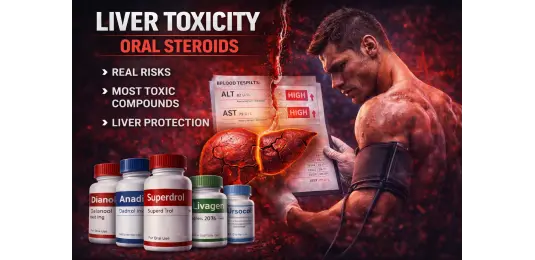
Why Oral Steroids Affect the Liver
The liver processes everything that passes through the gut, and a 17-alpha-alkylated oral is deliberately built to survive that first pass. The same chemical change that keeps the hormone active also forces the liver to handle a compound it does not meet naturally. Enzyme markers such as ALT and AST are the visible result - they rise in proportion to the dose and the length of the run, and they return toward normal after the oral is stopped.
What Is 17-Alpha Alkylation
Alkylation means a small carbon group is added at the 17-alpha position of the steroid molecule. Without it, the liver would break the hormone down on the first pass and the tablet would do almost nothing. With it, the oral survives into circulation - and the liver pays for that survival with extra workload.
Which Orals Are Hardest on the Liver
| Class | Examples on GasProids | Relative liver load |
|---|---|---|
| Anadrol-class | Oxymetholon, Oxyplex | Highest |
| Superdrol-class | Superdrol | Highest |
| Dianabol-class | Dianabol 20, Methanabol 20 | High |
| Winstrol oral | Winstrol 10, Stanabol 10 Tablets | Moderate to high |
| Anavar-class | Anavar 10, Oxanabol Tablets | Mild to moderate |
| Turinabol-class | Turanabol, Turanaplex | Mild |
Understanding ALT and AST
ALT and AST are the two enzymes most often checked during an oral run. ALT is the more liver-specific marker: it sits inside liver cells and leaks into the blood when those cells are stressed. AST is less specific and also appears in muscle, which is why heavy training alone can nudge it. What matters is the trend - a steady climb through the run is the signal to shorten it or stop, and values returning to baseline after the cycle confirm the liver is recovering.
Real-World Stress Patterns
Liver stress follows dose and duration more than the brand of the product. A 4-6 week dianabol run at 30-40 mg daily rarely produces alarming numbers; the same compound at high doses for 8+ weeks, or stacked with another alkylated oral, is where enzyme readings start climbing seriously. The pattern is additive, not optional.
Support That Is Commonly Referenced
Liver support during an oral run usually means three things: an antioxidant reference such as NAC, a bile-acid product such as ursodeoxycholic acid, and hydration with reduced alcohol and processed load. On GasProids the relevant references are Ursocol 150 mg from the Liver and GI section and the research peptide Livagen 20 mg from the Dragon Pharma line.
Why Alcohol and Lifestyle Matter
The liver has one processing budget. Drinking during an alkylated oral run, training with poor hydration, or adding other hepatotoxic medications stacks directly onto the same organ. Keeping alcohol out of the cycle is the single highest-impact lifestyle choice for enzyme numbers.
Prevention Is Easier Than Repair
The practical rules are short: one alkylated oral at a time, 4-6 weeks for mass orals, liver support through the run, enzymes checked before and after, and alcohol off the menu. Orals that are mild on the liver - anavar-class and turinabol-class - exist for a reason.
Oral Steroids and the Liver - Common Questions
Are oral steroids bad for the liver?
Most are hepatotoxic by design: 17-alpha alkylation makes them orally active and liver-demanding at the same time. The load scales with dose and duration.
Which oral steroid is most toxic to the liver?
Anadrol-class and superdrol-class orals carry the highest load; dianabol sits just below. Anavar-class and turinabol-class are the mild end of the range.
Can liver damage be reversed after a cycle?
Enzyme elevation from alkylated orals is typically transient and returns toward baseline after the compound stops; persistent elevation needs a professional check.
Do injectable steroids affect the liver?
Far less - injectables bypass the first pass, so their liver impact is minimal compared with the same compound taken orally.
How do users support liver health on cycle?
With NAC, bile-acid references such as ursodeoxycholic acid, hydration and no alcohol; the window of the oral itself remains the main limit.
How long should an oral cycle be to protect the liver?
4-6 weeks is the reference window for mass orals and up to 8 for the mildest compounds, with enzyme bloodwork before and after the run.
Relevant Compounds
Liver-relevant references on GasProids: Ursocol 150 mg (bile-acid support), Livagen 20 mg (research peptide), and the oral classes discussed above: Dianabol 20, Oxymetholon, Anavar 10.
Keep Reading
Cholesterol on steroids - how cycles shift lipids and what to watch.
High blood pressure on steroids - the cardiovascular side of long cycles.
Kidney stress on steroids - hydration and the other filtration organ.