
Testosterone Boosters: Do They Actually Work or Not
Why the Booster Market Exists
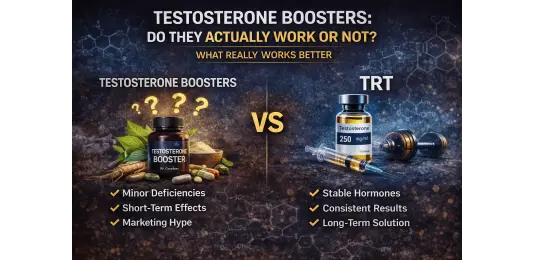
Low-testosterone symptoms are common and the supplement industry built a category on them: a bottle that promises the energy and libido of youth. The gap between the promise and the evidence is the story - most boosters sell on anecdote, and the bloodwork rarely shows the change the label implies.
The Ingredients With Some Signal
- Vitamin D - in deficient men, correcting low vitamin D supports testosterone; in sufficient men it does nothing extra.
- Zinc - deficiency suppresses testosterone; supplementation helps only when intake was genuinely low.
- Ashwagandha - some studies show small increases linked to stress reduction - the cortisol pathway, not a direct androgen effect.
- Sleep and body fat - not ingredients, but the two levers that outperform every supplement in the aisle.
What Does Not Work
| Claim | Reality |
|---|---|
| Fenugreek, tribulus "raise testosterone" | No consistent effect on blood levels in trials |
| Proprietary "T-booster" blends | Under-dosed ingredients, no studies on the mix |
| Testosterone-precursor formulas | Do not bypass the body's own regulation |
The Order That Actually Works
Before buying anything: fix sleep, drop body fat, train heavy and manage stress - the natural levers from the natural testosterone article. Then recheck bloodwork. If levels are still low with symptoms, the conversation moves to TRT - not to a bigger supplement stack.
Testosterone Boosters - Common Questions
Do testosterone boosters actually work?
Most do not move blood testosterone meaningfully; vitamin D and zinc help only when deficient, and ashwagandha's small effect runs through stress.
What is the best natural testosterone booster?
Sleep, body fat loss and heavy training outperform every supplement; among ingredients, correcting vitamin D and zinc deficiency has the clearest evidence.
Does tribulus raise testosterone?
No consistent effect on blood testosterone in trials - it is one of the most studied and least effective classic claims.
Can supplements replace TRT?
No - a confirmed deficiency needs actual hormone replacement; the natural article shows the order before that decision.
How long should I try a booster before judging it?
Six to eight weeks with a before-and-after panel - if total and free testosterone did not move, the product did not either.
Are testosterone boosters safe?
Most are harmless at label doses, but unlabeled hormonal ingredients appear in some products - buy from sources with testing and tell your doctor.
Relevant References
When the panel says real replacement is needed: Enanthate 250 and Cypionat 250 in the Testosterone Base section.
Keep Reading
Increase testosterone naturally vs TRT - the real levers.
TRT explained - when supplements stop being the answer.
Bloodwork on TRT and steroids - testing the claim.