Cheap TRT: Is It Safe and What Are the Risks
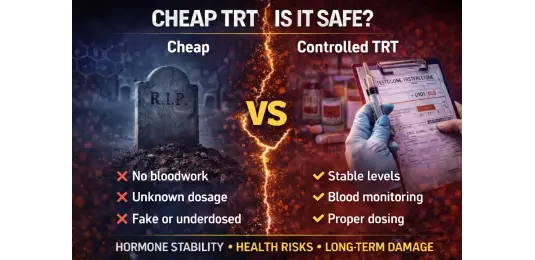
Testosterone replacement therapy has shifted from a niche medical treatment to a widely discussed long-term solution for men dealing with low testosterone. As more users begin to understand that TRT is not a short cycle but an ongoing protocol, the question of cost becomes unavoidable. Monthly expenses, bloodwork, and consistency over time make many users look for cheaper alternatives, especially when the goal is sustainability rather than short-term results.
The idea behind cheap TRT seems simple — reduce cost while keeping the same outcome. However, the reality is more complex. TRT is not just about injecting testosterone, but about maintaining stable hormone levels, controlling side effects, and managing long-term health markers. When cost-cutting removes any of these components, the entire system becomes less predictable, even if the compound itself remains the same.
What Cheap TRT Actually Means
Cheap TRT is not a single method, but a collection of compromises. It can involve sourcing testosterone outside of structured environments, choosing protocols based purely on cost, reducing injection frequency to save supplies, or avoiding regular bloodwork. Each of these decisions may seem minor individually, but together they change how stable and controlled the therapy actually is.
For example, longer esters like Testosterone Undecanoate 250 are often used to simplify TRT by reducing injection frequency and creating smoother release patterns. This can be an efficient choice when used correctly. However, without understanding how esters behave, users may mismanage dosing or timing, which is why comparisons like Undecanoate vs Enanthate for TRT become essential when trying to balance cost with stability.
Where Cheap TRT Starts to Break Down
The breakdown usually begins with inconsistency. TRT depends on stable hormone levels, and stability comes from predictable dosing, timing, and compound behavior. When injections become irregular, doses are estimated rather than measured, or product quality is uncertain, hormone levels begin to fluctuate.
These fluctuations are not always dramatic on paper, but they are noticeable in real life. Energy becomes inconsistent, mood shifts more frequently, recovery becomes less predictable, and libido may vary without clear reason. Instead of a stable baseline, users experience a cycle of small ups and downs that reduce the overall effectiveness of the therapy.
Hidden Health Risks Most Users Ignore
One of the biggest mistakes with cheap TRT is focusing only on testosterone levels while ignoring broader health markers. TRT influences cardiovascular function, blood viscosity, lipid balance, and hormonal interactions. When monitoring is reduced or skipped, these factors can move outside safe ranges without immediate warning signs.
Common issues include rising blood pressure, worsening cholesterol profiles, and increased hematocrit, which thickens the blood. These changes develop gradually and are often missed without routine tracking, making them more dangerous over time than short-term side effects.
Hormonal balance also plays a major role. Testosterone converts into estrogen, and without proper control, this can lead to water retention, mood instability, and reduced overall performance quality. Managing this balance, as explained in estrogen control, is a core part of TRT rather than an optional step.
Why Skipping Structure Creates Long-Term Problems
TRT is often misunderstood as a fixed protocol, but in reality, it is dynamic. The body adapts over time, meaning dosing, frequency, and balance need adjustment. Removing structured oversight may reduce cost, but it also removes the feedback loop that keeps the protocol optimized.
Without adjustments, small imbalances accumulate. Slightly elevated estrogen, gradual increases in hematocrit, or subtle lipid changes may not be noticeable immediately, but over months and years they can significantly impact health and performance. This is why structured approaches described in TRT Explained emphasize ongoing monitoring rather than static dosing.
Cheap TRT vs Smart TRT
The difference between cheap TRT and smart TRT lies in what is prioritized. Smart TRT reduces unnecessary expenses while protecting the key elements that ensure stability and safety. This includes choosing the right ester, maintaining consistent injections, and tracking only the most relevant health markers.
Cheap TRT, by contrast, often removes these elements entirely. It focuses on immediate cost reduction rather than long-term sustainability, which leads to inconsistent results and higher risk over time. The goal should not be the lowest price, but the most efficient and stable protocol possible.
Practical Take: How to Lower Cost Without Increasing Risk
Reducing TRT cost safely is possible, but it requires understanding where compromises are acceptable and where they are not. Compound choice, injection frequency, and basic monitoring should remain consistent, while unnecessary services or excessive testing can be reduced.
Stability should always come first. A simple, well-structured protocol with consistent dosing will outperform a cheaper but inconsistent approach every time. The more predictable the system is, the easier it becomes to maintain both results and long-term health without unnecessary expense.
Conclusion
Cheap TRT is not inherently unsafe, but it becomes risky when cost-cutting removes the structure that keeps hormone levels stable and health markers controlled. Testosterone therapy works best when it is consistent, monitored, and adjusted based on real feedback.
The most effective approach is not to minimize cost at all times, but to optimize it intelligently. Long-term success with TRT depends on stability, awareness, and proper management, not on finding the cheapest possible option.
FAQ
Is cheap TRT always unsafe?
No, but it becomes unsafe when consistency, monitoring, or quality control are removed from the protocol.
What is the biggest risk of cheap TRT?
Unstable hormone levels combined with a lack of monitoring, which can lead to cardiovascular and hormonal complications over time.
Can TRT be done without a clinic?
Yes, but it requires a solid understanding of dosing, bloodwork, and hormone management to maintain safety and effectiveness.
Does cheaper testosterone mean lower quality?
Not always, but unreliable sourcing increases the risk of incorrect dosing, inconsistency, or contamination.
How can TRT be made more affordable safely?
By focusing on stable protocols, consistent injections, and essential monitoring while avoiding unnecessary costs.