
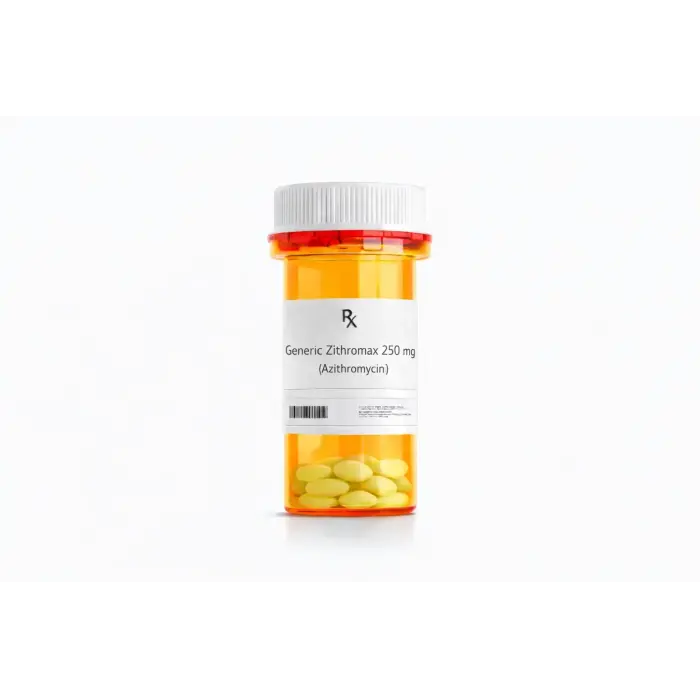
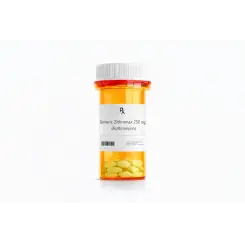
Zithromax 250 mg
- Active Substance: Azithromycin
- Form: Tablets
- Dosage: 250 mg/tab
- Pack Size: 30 tabs
- Use Case: Bacterial infections
- Utility Score: 9/10
- Side Effects Score: 4/10
- Key Benefits: Fights bacterial infection
Zithromax 250 mg (Azithromycin) — 30 Tablets
Zithromax 250 mg contains Azithromycin, a macrolide antibiotic widely used to help control a variety of bacterial infections. Azithromycin works by interfering with bacterial protein synthesis, which prevents bacteria from continuing to grow and supports the body's ability to clear the infection more effectively.
This medication is commonly used in bacterial conditions affecting the respiratory tract, throat, skin, and other susceptible tissues where Azithromycin is considered appropriate. Its practical dosing profile and broad clinical familiarity make it one of the better-known antibiotics in general use.
Azithromycin is also valued for its long half-life, which supports convenient dosing and steady antibacterial activity over time. When taken as directed and for the full prescribed duration, Zithromax helps control bacterial spread, support symptom resolution, and improve the conditions needed for recovery.
Main Effects
The main effect of Zithromax 250 mg is suppression of bacterial growth. Azithromycin blocks the protein production bacteria need in order to survive and reproduce, which helps contain the infection and reduce further bacterial activity.
As bacterial pressure decreases, symptoms linked to the infection may begin to ease, and the immune system can work more efficiently. This is why proper use and full-course completion remain central to getting reliable results from antibiotic therapy.
How It's Commonly Used
Zithromax tablets are typically taken once daily as prescribed by a healthcare provider, although the exact schedule depends on the infection being treated and the chosen treatment plan. Patients are usually instructed to follow the course carefully rather than adjusting the duration on their own.
Completing the full antibiotic course is important even if symptoms improve early. Stopping too soon can weaken treatment success and may contribute to incomplete bacterial control.
Why This 30-Tablet Pack Makes Sense
A 30-tablet pack provides a practical supply for physician-directed treatment plans that may require longer coverage, repeated scheduling, or flexible course structures depending on the condition being managed. It also allows users to keep an adequate quantity available when the prescribed plan calls for it.
From a practical standpoint, a larger pack reduces the risk of running short mid-course. That matters with antibiotics, because maintaining full course completion is much more important than with casual or occasional-use products.
Side Effects and Control
Azithromycin is generally well tolerated, although some individuals may experience nausea, mild stomach upset, loose stools, or temporary digestive discomfort. These effects are among the more familiar tolerability issues seen with many oral antibiotics.
Taking the medication exactly as directed helps support effective treatment and reduces avoidable problems linked to irregular use. If symptoms become unusual, persistent, or more severe than expected, medical review is appropriate to confirm safe continuation.
Conclusion
Zithromax 250 mg provides antibacterial support through the action of Azithromycin. When used correctly and for the full prescribed course, it helps control bacterial activity, supports recovery, and contributes to a more reliable treatment outcome.
What is Zithromax 250 mg used for?
Used to treat bacterial infections.
How should Zithromax 250 mg be taken?
Usually once daily as prescribed.
What is the active ingredient in Zithromax?
Azithromycin.
What are the common side effects?
Nausea, stomach upset, or mild digestive discomfort.
How long does a 30-tablet pack last?
Depends on the prescribed treatment course.
Related Products
- Active Substance: Azithromycin
- Form: Tablets
- Dosage: 500 mg/tab
- Pack Size: 30 tabs
- Use Case: Bacterial infections
- Utility Score: 9/10
- Side Effects Score: 4/10
- Key Benefits: Fights bacterial infection

- Active Substance: Amoxicillin Trihydrate
- Form: Oral capsules
- Dosage: 500 mg per capsule
- Pack Size: 60 capsules
- Use Case: Bacterial infection management
- Utility Score: 9/10
- Side Effects Score: 3/10
- Key Benefits: Strong antibacterial coverage with reliable infection control
- Active Substance: Amoxicillin Trihydrate, Clavulanic acid
- Form: Oral tablets
- Dosage: 625 mg per tablet
- Pack Size: 30 tablets
- Use Case: Resistant bacterial infection control
- Utility Score: 9/10
- Side Effects Score: 4/10
- Key Benefits: Broad spectrum antibiotic activity with beta-lactamase protection
- Active Substance: Doxycycline
- Form: Oral capsules
- Dosage: 100 mg per capsule
- Pack Size: 30 capsules
- Use Case: Bacterial infection control
- Utility Score: 9/10
- Side Effects Score: 3/10
- Key Benefits: Broad spectrum antibacterial activity for effective infection management
- Active Substance: Azithromycin
- Form: Tablets
- Dosage: 250 mg/tab
- Pack Size: 30 tabs
- Use Case: Bacterial infections
- Utility Score: 9/10
- Side Effects Score: 4/10
- Key Benefits: Fights bacterial infection