
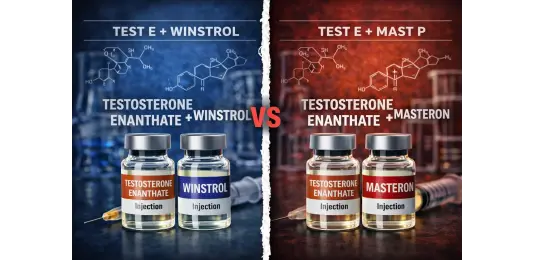
Test E + Winstrol vs Test E + Mast P - Dryness or Detail?
Search winstrol vs masteron and you'll often see both described as cutting compounds. That's accurate, but in real cycles they create very different results depending on how lean you are and what look you're chasing.
In this comparison, we're using Testosterone Enanthate (Test E) as the base, combined with either Winstrol (Stanozolol) or Masteron Propionate (Mast P).
This reflects real-world use: Winstrol is often used to push maximum dryness and hardness, while Mast P is used to enhance detail and maintain a more balanced, aesthetic look.
This isn't theory. It's how Test E + Winstrol and Test E + Mast P actually perform in real cutting and conditioning phases.
Compounds Used in This Comparison
- Test E: Testosterone Enanthate - stable hormonal base
- Winstrol: Stanozolol - dry compound used for hardness and conditioning
- Mast P: Drostanolone Propionate - fast-acting DHT compound for detail and density
What's the Core Difference?
The difference comes down to how the physique looks under low body fat conditions.
Test E + Winstrol is built for maximum dryness. It reduces the "soft" look and pushes a harder, sharper visual appearance.
Test E + Mast P is built for detail. It enhances separation, density, and overall aesthetic balance.
- Winstrol = dryness, hardness, sharp edges
- Mast P = detail, density, aesthetic finish
Dryness and Visual Hardness
Test E + Winstrol is one of the most aggressive combinations for achieving a dry, hardened look. Muscles appear flatter but sharper, with reduced water retention.
This effect is especially noticeable in already lean athletes. A common reference point is Winstrol Inject, widely used in advanced conditioning phases. Some athletes also use oral formats such as Winstrol 10 or Winstrol 50 for shorter or more flexible cutting blocks.
Test E + Mast P also produces a dry look, but not as aggressively. Instead, it maintains muscle fullness while improving definition.
Muscle Detail and Separation
This is where Mast P stands out.
Test E + Mast P enhances muscle separation and creates a more "3D" look. Muscles appear fuller, but still defined.
Test E + Winstrol improves sharpness, but can sometimes reduce muscle fullness if not managed properly.
- Mast P = fuller, more aesthetic detail
- Winstrol = sharper but flatter look
Strength and Training Feel
Both compounds support strength during cutting phases.
Winstrol is often associated with increased strength and performance in short phases, but may feel harsher on joints.
Mast P provides a more stable and controlled training feel, helping maintain performance without excessive strain.
Joint Comfort and Training Stress
This is one of the biggest real-world differences.
Winstrol is known for causing joint dryness, especially in low body fat conditions. This can make heavy training less comfortable.
Mast P does not typically have this effect and is often easier to tolerate during longer cutting phases.
For athletes prioritizing performance and comfort, Mast P is usually the safer choice.
Water Retention and Physique Stability
Both stacks reduce water retention, but in different ways.
Winstrol actively dries out the physique, creating a very sharp but sometimes less full look.
Mast P maintains a cleaner balance, keeping the physique dry while preserving muscle shape.
- Winstrol = maximum dryness
- Mast P = balanced dryness + fullness
Blood Level Behavior
Winstrol (injectable or oral) acts relatively quickly and is often used in shorter phases.
Mast P, as a short ester, also provides fast response and allows tight control over the cycle.
Both require structured dosing, but Mast P is generally more forgiving.
Systemic Load and Tolerance
Test E + Winstrol can feel harsher, especially due to joint stress and overall dryness.
Test E + Mast P is typically easier to tolerate and better suited for longer conditioning phases.
This makes Mast P more versatile, while Winstrol is often used as a short "finishing tool."
Real-World Take
In real-world use, Test E + Winstrol is often described as a "hardening phase." It pushes maximum dryness and sharpness but requires careful management.
Test E + Mast P is a more balanced conditioning stack. It enhances detail and maintains a fuller, more aesthetic look.
This is why Winstrol is often used at the end of a cycle, while Mast P can be used throughout a longer conditioning phase.
Which Stack Should You Choose?
- If your goal is maximum dryness and sharp conditioning, Test E + Winstrol is the better choice.
- If your goal is muscle detail, balance, and better training feel, Test E + Mast P is more suitable.
Both stacks are effective. The difference is whether you want extreme dryness or a more complete aesthetic result.
Frequently Asked Questions
Is Winstrol stronger than Masteron?
Winstrol produces a stronger drying effect, while Masteron improves detail and balance.
Which is better for cutting?
Both are used for cutting, but Winstrol is more aggressive.
Does Winstrol affect joints?
Yes, some users report joint discomfort.
Which looks better on stage?
It depends - Winstrol for sharpness, Mast for fullness and detail.
Which is easier to tolerate?
Mast P is generally easier on the body.
Relevant Compounds Discussed
- Testosterone Enanthate 250 (Test E)
- Testosterone Enanthate 400 (Test E)
- Winstrol Inject
- Winstrol 10
- Winstrol 50
- Masteron 100 (Mast P)
Keep Reading
Winstrol Vs Masteron
Test E Mast P Vs Test E Primo E
Winstrol Vs Anavar Cutting